How Certification Timelines for Random Number Generators Shape Roulette Variant Releases in Emerging State Markets
Wendy Lehmann · Aug 31, 2026
How Certification Timelines for Random Number Generators Shape Roulette Variant Releases in Emerging State Markets
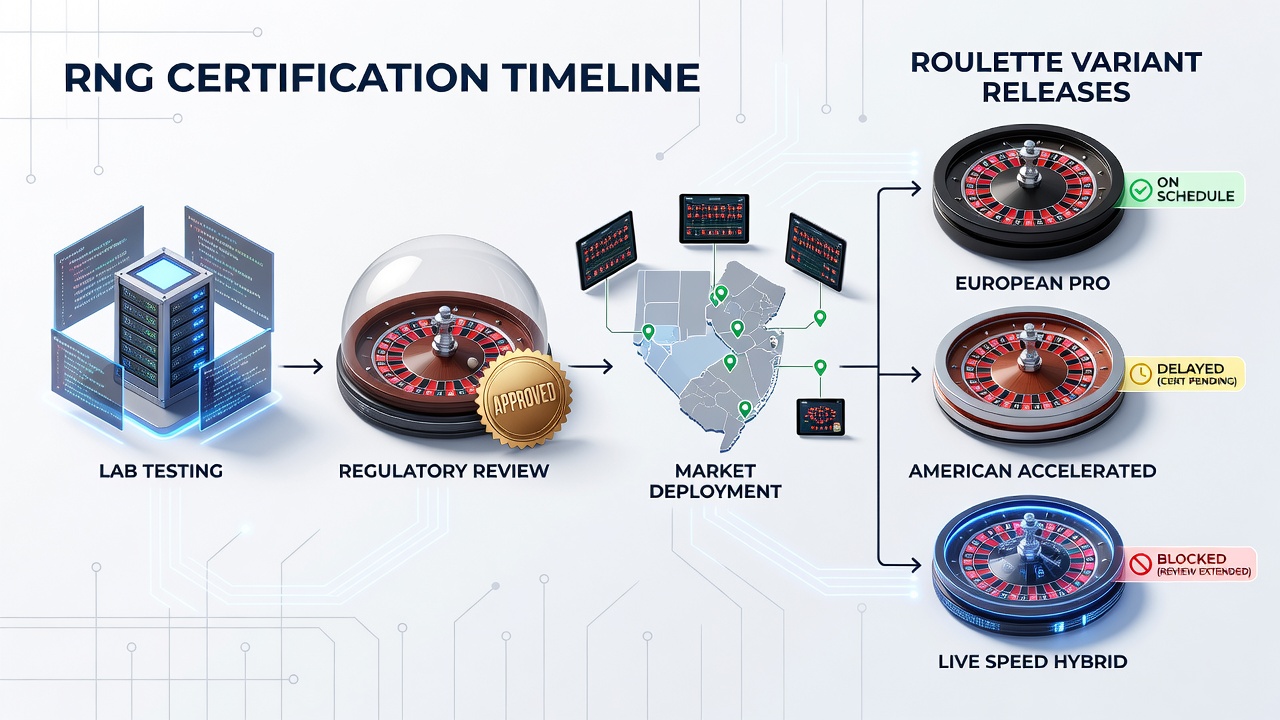
Certification timelines for random number generators determine when operators can introduce specific roulette variants into newly regulated state markets, and these processes often stretch across several months because laboratories must verify compliance with each jurisdiction's technical standards before any game goes live. Emerging markets such as those in the Midwest and Southeast have seen operators adjust release schedules based on how long the approval cycle lasts for European, American, or French wheel configurations, each of which carries distinct payout structures and rule sets that require separate validation runs.
The Certification Pathway for RNG Systems
State regulators require independent testing laboratories to evaluate RNG outputs against statistical benchmarks that confirm fairness and unpredictability, and this evaluation includes thousands of simulated spins plus source code reviews before a certificate gets issued. Laboratories like those accredited by the Nevada Gaming Control Board and the Alcohol and Gaming Commission of Ontario handle much of this workload for U.S. states, yet each new jurisdiction adds its own documentation layer that extends the overall duration. Data from regulatory filings shows average certification periods ranging from 90 to 180 days when a provider submits a new roulette variant, and delays compound when multiple variants compete for the same testing queue.
How Variant-Specific Requirements Extend Timelines
Roulette variants differ in wheel layout and betting options, so certification teams must confirm that the RNG produces unbiased results across every possible outcome combination unique to that variant. American roulette includes the double-zero pocket while European versions omit it, and these mechanical differences translate into distinct test scripts that cannot share results from prior certifications. Providers therefore submit each variant as a separate package, which stretches the calendar because laboratories process requests sequentially when staff resources remain limited during peak legalization waves.
Effects on Release Schedules in New State Markets
Operators entering markets that legalized iGaming in 2025 and 2026 frequently announce staggered launch dates that align with expected certification completion rather than marketing calendars. In August 2026 several platforms postponed American roulette rollouts in one Midwestern state after the testing laboratory requested additional entropy analysis, while European variants cleared earlier because their submissions arrived weeks ahead. Those who've tracked these patterns note that synchronization between RNG approval and broader platform certification creates bottlenecks, especially when states mandate that every game title receive individual sign-off before any real-money play begins.
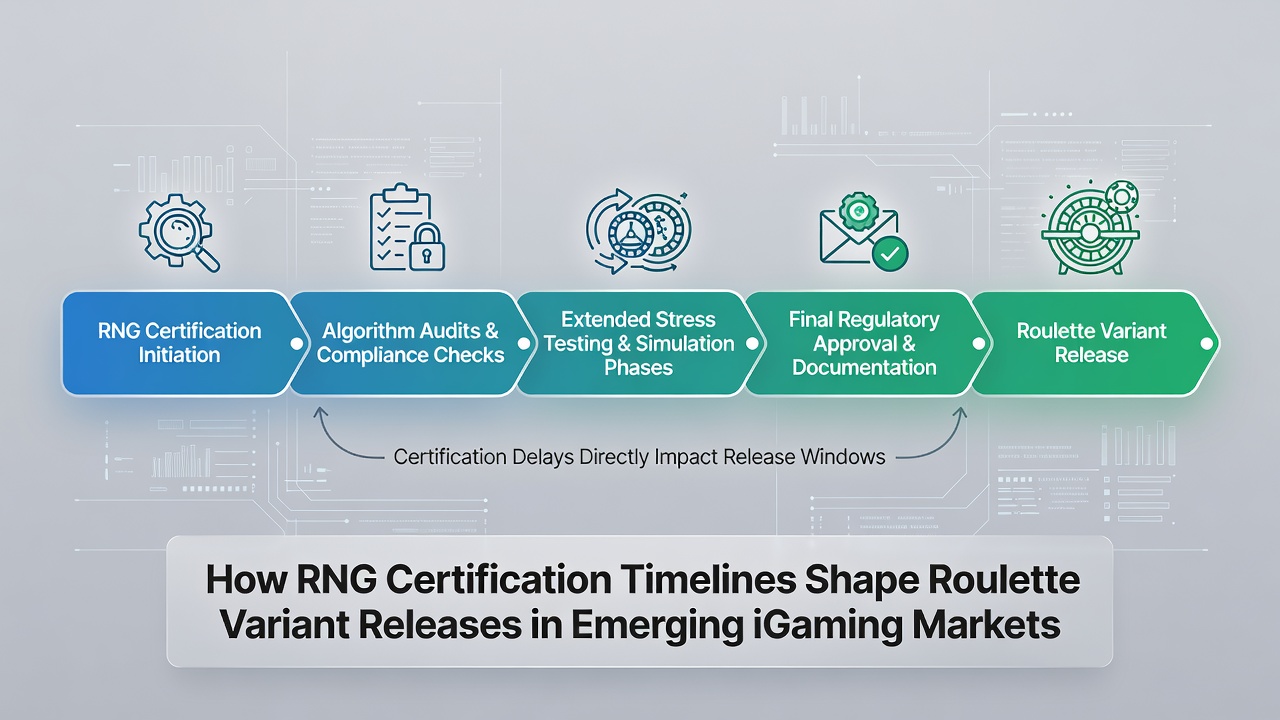
Research from the American Gaming Association indicates that markets opening with limited approved titles experience slower revenue ramp-up compared with jurisdictions that cleared broader game libraries sooner, and the difference traces directly to how quickly RNG certificates move through the pipeline. Providers adapt by prioritizing variants that reuse core RNG modules already cleared in neighboring states, which reduces redundant testing yet still demands jurisdiction-specific documentation. Observers note that this reuse strategy shortens timelines by roughly 30 percent in some cases, although full revalidation remains mandatory.
Regulatory Coordination Across Jurisdictions
States sometimes accept certifications issued by other U.S. regulators under reciprocity agreements, but roulette variants often require supplemental review because local rules may alter minimum return-to-player thresholds or prohibit certain side bets. The New Jersey Division of Gaming Enforcement maintains a list of accepted labs whose reports carry weight in multiple jurisdictions, yet each state still conducts its own final review that adds weeks to the process. When providers target simultaneous launches across two or three new markets, they must stagger submissions so that laboratory capacity does not become the limiting factor.
Industry reports show that French roulette, with its single-zero layout and specific even-money bet rules, tends to receive certification faster than multi-wheel hybrid variants because the RNG logic stays simpler. This difference influences which games appear first on new platforms once a state grants operating licenses. Providers monitor laboratory backlogs through regular status updates, and they adjust marketing campaigns accordingly rather than risk announcing dates that certification delays later invalidate.
Conclusion
Certification timelines for random number generators continue to dictate the pace at which roulette variants reach players in emerging state markets, and operators who align submission strategies with known laboratory workflows achieve earlier market entry. Regulatory data collected through 2026 demonstrates that states with streamlined acceptance of out-of-state reports experience faster diversification of available wheel games, while those requiring full independent reviews see narrower initial catalogs. The relationship between these technical approvals and commercial release calendars remains central to how quickly new markets mature.